

What Is an ERV System? A Complete Homeowner’s Guide
Indoor air quality plays a major role in the comfort, health, and energy efficiency of a home. As modern homes become more airtight to reduce heating and cooling costs, they also trap moisture, odors, allergens, and indoor pollutants. That’s where an ERV System becomes valuable.
- What Is an ERV System? A Complete Homeowner’s Guide
- Key Takeaways
- Main Article
- What Is an ERV System?
- How Does an ERV System Work?
- Main Components of an ERV System
- Benefits of an ERV System
- ERV System vs HRV
- Where Is an ERV System Most Useful?
- Signs Your Home May Need an ERV
- Choosing the Right ERV System
- ERV Installation
- ERV Maintenance
- How Much Does an ERV System Cost?
- Common ERV System Problems
- Tips for Getting the Best Performance
- Is an ERV System Worth It?
- Frequently Asked Questions
- Conclusion
An Energy Recovery Ventilator (ERV) continuously exchanges stale indoor air with fresh outdoor air while helping retain heating or cooling energy. This makes it easier to enjoy cleaner air without significantly increasing energy consumption.
Whether you’re building a new house, upgrading your HVAC system, or simply researching better ventilation options, understanding how an ERV system works can help you make a more informed decision. This guide explains everything homeowners need to know, including benefits, costs, installation, maintenance, and how ERVs compare with other ventilation systems.
Key Takeaways
- An ERV system improves indoor air quality by replacing stale indoor air with fresh outdoor air.
- It transfers both heat and moisture between incoming and outgoing air to improve energy efficiency.
- ERVs work especially well in tightly sealed, energy-efficient homes.
- Regular maintenance helps maximize performance and extend system lifespan.
- Choosing the right size and installation method is essential for optimal results.
Main Article
What Is an ERV System?
An ERV System, or Energy Recovery Ventilator, is a whole-home ventilation system designed to improve indoor air quality while minimizing energy loss.
Unlike opening windows, which allows conditioned air to escape, an ERV transfers energy from outgoing indoor air to incoming fresh air. During winter, it captures heat from the warm indoor air before it leaves the home. During summer, it helps reduce the heat entering your home by transferring some of it to the outgoing air.
An ERV also transfers a portion of the moisture between the two air streams. This helps maintain more balanced indoor humidity levels throughout the year.
The result is cleaner, healthier indoor air with reduced heating and cooling costs.
How Does an ERV System Work?
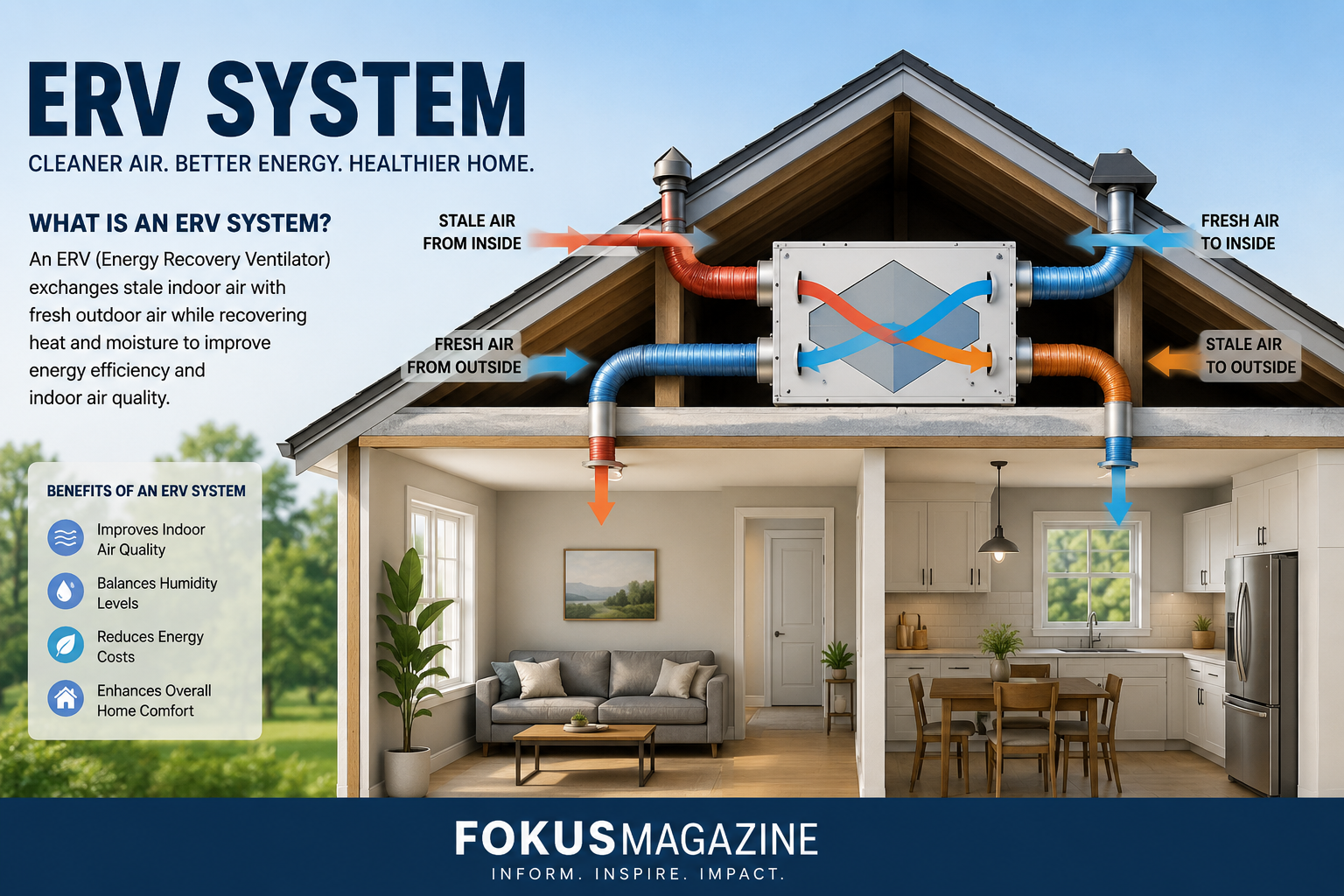
An ERV operates using two separate airflow paths.
- One removes stale indoor air.
- The other brings fresh outdoor air inside.
At the center of the system is a heat and moisture exchange core. The two air streams never mix directly. Instead, they pass alongside each other, allowing heat and humidity to transfer efficiently.
The process generally follows these steps:
- Stale indoor air is extracted from bathrooms, kitchens, and living spaces.
- Fresh outdoor air is drawn into the system.
- Heat and moisture are exchanged through the recovery core.
- Filtered fresh air is distributed throughout the home.
- Polluted indoor air is exhausted outdoors.
This continuous cycle keeps indoor air fresh while reducing the workload on heating and cooling equipment.
Main Components of an ERV System
A typical ERV system includes several essential parts.
| Component | Purpose |
|---|---|
| Heat recovery core | Transfers heat and moisture |
| Supply fan | Brings outdoor air inside |
| Exhaust fan | Removes stale indoor air |
| Air filters | Capture dust and airborne particles |
| Ductwork | Delivers fresh air throughout the home |
| Control panel | Adjusts airflow and operating schedules |
Many modern systems also include humidity sensors, smart controls, and programmable timers.
Benefits of an ERV System
Improved Indoor Air Quality
Fresh outdoor air helps reduce:
- Dust
- Pollen
- Cooking odors
- Pet odors
- Volatile organic compounds (VOCs)
- Carbon dioxide buildup
This creates a healthier living environment, especially for households with allergies or asthma.
Better Energy Efficiency
One of the biggest advantages is energy recovery.
Instead of wasting conditioned air, an ERV captures much of its heating or cooling energy before exhausting it outdoors. This reduces the amount of work required by your HVAC system.
Balanced Indoor Humidity
Because ERVs transfer both heat and moisture, they help stabilize humidity levels.
Benefits include:
- Greater comfort
- Reduced dry air during winter
- Less sticky indoor conditions during humid seasons
- Lower risk of mold caused by excess moisture
Enhanced Home Comfort
Consistent ventilation means fewer temperature swings and fewer stale rooms.
Fresh air is delivered throughout the home rather than relying on occasional window opening.
Reduced HVAC Wear
Since the HVAC system doesn’t have to condition as much incoming outdoor air, it may experience less strain over time.
ERV System vs HRV
Many homeowners compare ERVs with Heat Recovery Ventilators (HRVs).
Although similar, they serve different climates and needs.
| Feature | ERV | HRV |
|---|---|---|
| Transfers heat | Yes | Yes |
| Transfers moisture | Yes | No |
| Controls indoor humidity | Better | Limited |
| Best for humid climates | Yes | Less suitable |
| Best for cold, dry climates | Sometimes | Often preferred |
Generally:
- ERVs are ideal where humidity control is important.
- HRVs are often better in very cold, consistently dry climates.
Where Is an ERV System Most Useful?
An ERV performs particularly well in:
- New energy-efficient homes
- Airtight construction
- Homes with spray foam insulation
- Houses using central HVAC systems
- Homes with multiple occupants
- Buildings where windows remain closed for much of the year
These homes often have limited natural air exchange, making mechanical ventilation essential.
Signs Your Home May Need an ERV
You may benefit from an ERV system if you notice:
- Persistent stale indoor air
- High humidity
- Window condensation
- Lingering cooking smells
- Excess dust
- Poor indoor air circulation
- Allergy symptoms indoors
- Mold growth caused by trapped moisture
These issues often indicate inadequate ventilation.
Choosing the Right ERV System
Several factors determine which ERV is best.
Home Size
Larger homes require higher airflow capacity.
Systems are typically rated by airflow measured in cubic feet per minute (CFM).
Climate
Climate affects how much heat and moisture recovery is needed.
Energy Efficiency Ratings
Look for models with high recovery efficiency and certified energy performance.
Noise Level
Some systems operate much more quietly than others.
Check sound ratings if installation is near bedrooms or living spaces.
Smart Features
Modern ERVs may include:
- Wi-Fi connectivity
- Automatic humidity control
- Smart thermostats
- Air quality monitoring
- Variable-speed fans
These features improve convenience and efficiency.
ERV Installation
Professional installation is generally recommended.
Installation usually involves:
- Mounting the unit
- Connecting ductwork
- Installing intake and exhaust vents
- Connecting electrical power
- Balancing airflow
- Testing system performance
Proper airflow balancing is essential for achieving maximum efficiency.
Poor installation can reduce ventilation effectiveness and increase energy costs.
ERV Maintenance
Routine maintenance keeps the system running efficiently.
Monthly
- Check filters
- Inspect air vents
- Ensure intake openings remain clear
Every 3–6 Months
- Clean or replace filters
- Inspect ductwork
- Check drainage if applicable
Annually
- Clean the heat recovery core
- Inspect fan motors
- Verify airflow balance
- Schedule professional servicing if recommended
Regular maintenance also extends equipment lifespan.
How Much Does an ERV System Cost?
Costs vary depending on home size, system capacity, and installation complexity.
Typical ranges include:
| Expense | Estimated Range |
|---|---|
| ERV unit | $800–$2,500 |
| Professional installation | $1,000–$3,500 |
| Total installed cost | Approximately $1,800–$6,000 |
Premium systems with advanced controls may cost more.
Although the initial investment can be significant, many homeowners appreciate the long-term benefits of improved comfort, healthier air, and potential energy savings.
Common ERV System Problems
Like any mechanical equipment, ERVs can develop issues.
Common problems include:
- Dirty filters
- Blocked vents
- Reduced airflow
- Fan noise
- Frost buildup in cold climates
- Poor humidity control
- Improper airflow balancing
Most issues can be prevented through regular inspection and maintenance.
Tips for Getting the Best Performance
To maximize your ERV system:
- Replace filters on schedule.
- Keep outdoor vents free from debris.
- Avoid blocking supply or return vents.
- Have airflow professionally balanced after installation.
- Use recommended maintenance intervals.
- Pair the ERV with a properly sized HVAC system.
- Monitor indoor humidity levels throughout the year.
Is an ERV System Worth It?
For many homeowners, the answer is yes.
An ERV offers benefits beyond simple ventilation. It improves indoor air quality while recovering energy that would otherwise be lost. This combination can increase comfort, reduce indoor pollutants, and help maintain healthier humidity levels.
Homes built to modern energy-efficiency standards often benefit the most because they naturally allow less fresh air to enter.
If you spend much of your time indoors, have allergy concerns, or want to improve your home’s ventilation without sacrificing efficiency, an ERV can be a worthwhile investment.
Frequently Asked Questions
1. What does ERV stand for?
ERV stands for Energy Recovery Ventilator, a system that exchanges stale indoor air with fresh outdoor air while recovering heat and moisture to improve energy efficiency.
2. Is an ERV system better than opening windows?
In many situations, yes. An ERV provides continuous, filtered ventilation while recovering energy, whereas opening windows can increase heating and cooling costs and allow outdoor pollutants to enter.
3. Does an ERV system reduce humidity?
An ERV helps balance indoor humidity rather than simply removing it. It transfers moisture between incoming and outgoing air to maintain more comfortable indoor conditions.
4. Can an ERV work with existing HVAC systems?
Yes. Many ERV systems integrate with central heating and cooling systems, though some can also operate independently depending on the home’s design.
5. How often should ERV filters be replaced?
Most manufacturers recommend inspecting filters monthly and replacing or cleaning them every three to six months, depending on usage and local air quality.
6. Does an ERV system save energy?
Yes. By recovering heat and moisture from exhausted indoor air, an ERV reduces the energy required to heat or cool incoming fresh air.
7. How long does an ERV system last?
With proper maintenance, many ERV systems can operate effectively for 15 to 20 years or more, though individual components such as fans or filters may require replacement sooner.
Conclusion
An ERV System is one of the most effective ways to improve indoor air quality while maintaining energy efficiency in today’s airtight homes. By continuously replacing stale indoor air with fresh outdoor air and recovering valuable heat and moisture, it creates a healthier, more comfortable living environment throughout the year.
Whether you’re planning a new build or upgrading an existing HVAC system, an ERV can provide lasting benefits when properly selected, installed, and maintained. Understanding how it works, comparing it with alternatives like HRVs, and following routine maintenance practices will help you get the best performance and long-term value from your investment.