
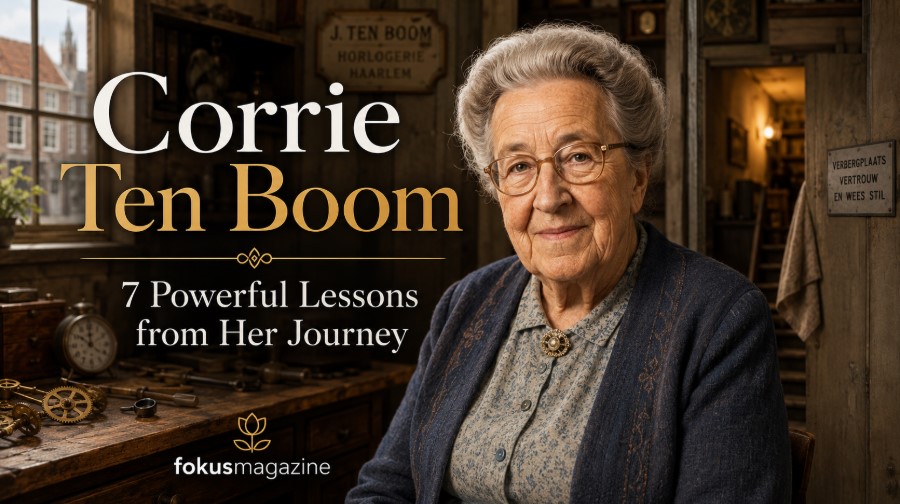

Why Corrie Ten Boom Still Matters Today
Some lives do more than fill history books. They quietly sit with us, challenge us, and make us ask harder questions about courage, kindness, and faith. Corrie Ten Boom lived one of those lives.
- Why Corrie Ten Boom Still Matters Today
- Corrie Ten Boom Bio
- Who Was Corrie Ten Boom?
- Early Life of Corrie Ten Boom
- The Historical Background: World War II and Nazi Occupation
- The Hiding Place: A Secret Room with a Big Meaning
- 7 Powerful Lessons from Corrie Ten Boom’s Journey
- Lesson 1: Courage Is Choosing What Is Right Despite Fear
- Lesson 2: Faith Can Give Strength in Dark Times
- Lesson 3: Forgiveness Is Powerful, But It Is Not Easy
- Lesson 4: Ordinary People Can Make Extraordinary Impact
- Lesson 5: Hope Can Survive Even in Suffering
- Lesson 6: Love Must Be Active, Not Just Spoken
- Lesson 7: Your Legacy Is Built by Your Choices
- Corrie Ten Boom’s Family and Their Role in Her Story
- Corrie Ten Boom as an Author and Speaker
- Why Corrie Ten Boom’s Story Still Inspires Readers
- Key Life Lessons from Corrie Ten Boom at a Glance
- Interesting Facts About Corrie Ten Boom
- Corrie Ten Boom and the Power of Forgiveness
- How Corrie Ten Boom Fits Into Holocaust History
- Why Her Story Is Important for Young Readers
- Corrie Ten Boom’s Legacy Today
- Common Questions About Corrie Ten Boom
- Conclusion: Corrie Ten Boom’s Journey Still Speaks
Her story is not just about surviving World War II. It is not only about hiding Jewish families from Nazi persecution. It is also about choosing love when hate seemed easier, choosing forgiveness when pain was fresh, and choosing hope when the world looked completely broken.
That is why the name Corrie Ten Boom still carries weight today. Her life speaks to people who feel afraid, overwhelmed, angry, or uncertain. She reminds us that ordinary people can do extraordinary things when they are guided by conviction.
She was not a soldier. She was not a politician. She was a Dutch watchmaker from Haarlem, Netherlands, who lived with her family above their watch shop. Yet, when history demanded courage, she answered.
In this article, we will explore Corrie Ten Boom: 7 Powerful Lessons from Her Journey, along with her biography, faith, family background, wartime bravery, and lasting legacy.
Corrie Ten Boom Bio
| Bio Detail | Information |
|---|---|
| Full Name | Cornelia Arnolda Johanna “Corrie” Ten Boom |
| Date of Birth | April 15, 1892 |
| Age | 91 years old at the time of her death |
| Profession | Watchmaker, Author, Christian Speaker, Humanitarian |
| Nationality | Dutch |
| Net Worth (approx.) | Not publicly documented; she lived modestly and focused on ministry, writing, and service |
| Notable Works / Achievements | Helped rescue Jews during World War II, survived Ravensbrück concentration camp, author of The Hiding Place, honored for humanitarian courage |
Who Was Corrie Ten Boom?
Corrie Ten Boom was a Dutch Christian woman best known for helping Jewish people escape Nazi persecution during World War II. She and her family turned their home into a secret refuge. Behind a false wall in Corrie’s bedroom, they created a hidden space known as “the hiding place.”
Her family’s watch shop became more than a business. It became a safe house, a quiet center of resistance, and a place where frightened people found shelter.
Corrie’s life changed forever when Germany occupied the Netherlands. Many people looked away because helping Jewish neighbors was dangerous. However, Corrie and her family believed that every human life had value. Their faith pushed them to act.
Eventually, the Ten Boom family was betrayed. Corrie, her sister Betsie, and other family members were arrested. Corrie later survived the Ravensbrück concentration camp, but Betsie died there. That loss could have made Corrie bitter forever. Instead, she became known around the world for speaking about forgiveness, healing, and faith.
That is what makes Corrie Ten Boom so unforgettable. She did not simply survive cruelty. She transformed suffering into a message that still inspires millions.
Early Life of Corrie Ten Boom
A Childhood Built on Faith and Service
Corrie was born in Haarlem, Netherlands, into a deeply religious Christian family. Her father, Casper Ten Boom, was a watchmaker. He was gentle, wise, and known for his kindness. Her mother, Cornelia, cared deeply for the poor and sick. From a young age, Corrie saw that faith was not just something people talked about on Sundays. It was something they lived every day.
The Ten Boom home was full of warmth, prayer, and service. People came to the family not only to repair watches but also for comfort and advice. Corrie grew up seeing her parents help neighbors, welcome strangers, and treat people with dignity.
That upbringing shaped her heart. Later, when danger came, she already understood that love required action.
Becoming a Watchmaker
In a time when many women were not encouraged to enter skilled trades, Corrie Ten Boom became one of the first licensed female watchmakers in the Netherlands. This achievement says a lot about her determination.
She worked in the family shop and became skilled in careful, patient work. Watchmaking requires attention, discipline, and calm hands. In a way, it reflected Corrie’s personality. She learned how small parts mattered, how timing mattered, and how broken things could be repaired.
Those ideas followed her into her spiritual life too.
The Historical Background: World War II and Nazi Occupation
When Nazi Germany invaded the Netherlands in 1940, life changed quickly. Jewish citizens faced harsh restrictions, fear, and deportation. Families disappeared. Friends became afraid to speak. Ordinary choices suddenly carried life-or-death consequences.
Many people stayed silent because they feared punishment. That fear was understandable. Helping Jewish people could lead to arrest, imprisonment, or death.
Yet Corrie Ten Boom and her family made a brave choice. They believed that obeying God and protecting innocent lives mattered more than personal safety.
Their home became part of the Dutch resistance. They hid Jewish families and others wanted by the Nazis. They also helped arrange ration cards and safe movement to other locations. It was dangerous work, but it was also deeply human.
The Hiding Place: A Secret Room with a Big Meaning
The Room Behind the Wall
The most famous part of Corrie’s story is the secret room built inside her bedroom. It was small, cramped, and hidden behind a false wall. In an emergency, people could rush inside and remain silent until the danger passed.
This room became known as “the hiding place.” It later became the title of Corrie’s most famous book.
The hiding place was not comfortable. It was not grand. But it represented something powerful: love under pressure.
More Than a Secret Space
The hiding place was more than a physical room. It became a symbol of protection, moral courage, and faith during crisis. For the people hiding there, it meant one more chance to live. For Corrie’s family, it meant risking everything for strangers.
Today, when people talk about Corrie Ten Boom, they often mention the hiding place because it captures the heart of her journey. It reminds us that courage does not always look loud. Sometimes, it looks like opening your door when the world tells you to close it.
7 Powerful Lessons from Corrie Ten Boom’s Journey
Lesson 1: Courage Is Choosing What Is Right Despite Fear
People often imagine brave people as fearless. But Corrie’s story shows something different. Courage does not mean fear disappears. It means you keep doing the right thing even while fear is present.
Corrie Ten Boom knew the danger. She knew that hiding Jewish people could get her arrested. She knew her family could suffer. Still, she acted.
That kind of courage feels very real. It is not dramatic movie courage. It is daily courage. The courage to say yes when silence would be safer. The courage to help when helping costs something.
What We Can Learn
Courage can appear in simple choices:
- Speaking up when someone is treated unfairly
- Helping someone who cannot repay you
- Doing the right thing when nobody is watching
- Holding your values when pressure rises
- Refusing to let fear control your actions
Corrie teaches us that courage grows when we practice it.
Lesson 2: Faith Can Give Strength in Dark Times
Faith was at the center of Corrie Ten Boom’s life. Her trust in God shaped her decisions before, during, and after the war. Even in prison and concentration camp conditions, Corrie held on to prayer, Scripture, and hope.
Her sister Betsie also played a major role in this. Betsie’s faith was gentle but strong. She believed that no place was so dark that God’s love could not reach it.
That belief helped Corrie endure suffering that would break many people.
Faith as Daily Strength
For Corrie, faith was not a decoration. It was survival. It helped her face hunger, illness, grief, and fear. Moreover, it gave her a reason to keep loving people even after seeing the worst of human cruelty.
This lesson still matters. Many people today face stress, loss, anxiety, and uncertainty. Corrie’s journey reminds us that faith can become an anchor when life feels unstable.
Lesson 3: Forgiveness Is Powerful, But It Is Not Easy
One of the most famous themes in Corrie’s life is forgiveness. After the war, she traveled widely and spoke about healing. At one point, she came face to face with a former concentration camp guard. He asked for forgiveness.
This moment was not easy for her. Forgiveness was not automatic. She had suffered. Her sister had died. The memories were painful.
Yet Corrie Ten Boom chose forgiveness as an act of obedience and freedom. She believed bitterness would keep her chained to the past.
Forgiveness Does Not Excuse Evil
It is important to understand this clearly. Forgiveness does not mean pretending nothing happened. It does not erase justice. It does not make cruelty acceptable.
Instead, forgiveness means refusing to let hatred own your heart forever.
Corrie’s message of forgiveness is powerful because it came from someone who had every human reason to remain bitter. Her choice did not come from comfort. It came from pain, faith, and deep inner struggle.
Lesson 4: Ordinary People Can Make Extraordinary Impact
Corrie was a watchmaker. Her father was a watchmaker. Their home was not a government office or military base. It was a family house above a shop.
Yet this ordinary family became part of something historically significant.
That is one of the most encouraging parts of Corrie Ten Boom’s journey. She proves that you do not need fame, wealth, or power to make a difference. You need conviction, compassion, and the willingness to act.
Small Actions Can Change Lives
The Ten Boom family did not save everyone. No one person could. But they saved real people. They offered shelter, hope, and dignity. For those individuals, that help meant everything.
Today, we often underestimate small acts. We think change must be huge to matter. Corrie’s life says otherwise. A room, a meal, a kind word, a brave decision, or a helping hand can become life-changing.
Lesson 5: Hope Can Survive Even in Suffering
Hope is not the same as pretending everything is fine. Corrie’s life proves that real hope can exist even when life is painful.
In Ravensbrück, Corrie and Betsie faced terrible conditions. Hunger, illness, fear, and death surrounded them. Still, they held on to hope. Betsie especially believed that after the war, they would help others heal.
Though Betsie did not live to see that work, Corrie carried the vision forward.
Hope Is a Choice
Corrie Ten Boom did not have easy optimism. Her hope was tested. It was stretched through grief and trauma. Yet she continued.
That kind of hope is stronger than shallow positivity. It says, “This is painful, but pain is not the whole story.” It says, “Darkness is real, but light still matters.”
For readers today, this lesson feels deeply personal. Whether someone is facing family struggles, financial pressure, loneliness, or emotional pain, Corrie’s journey offers a reminder that hope can remain alive.
Lesson 6: Love Must Be Active, Not Just Spoken
Many people speak about love. Corrie’s family lived it.
They did not simply say they cared about Jewish people. They hid them. They fed them. They protected them. They put themselves in danger for them.
That is active love.
Corrie Ten Boom showed that love becomes meaningful when it moves from words to action. Her faith did not stay private when others were suffering. It became visible.
Active Love in Everyday Life
We may not face the same situation Corrie faced, but the lesson still applies. Active love may look like:
- Checking on someone who feels forgotten
- Defending someone who is being mistreated
- Giving time to a person in need
- Listening with patience
- Choosing kindness when anger feels easier
- Helping without expecting praise
In addition, active love often requires inconvenience. It interrupts comfort. It asks for sacrifice. But that is exactly why it matters.
Lesson 7: Your Legacy Is Built by Your Choices
When Corrie was young, she likely never imagined that people around the world would one day read her story. She simply made choices based on faith and conscience.
Those choices became her legacy.
Today, Corrie Ten Boom is remembered as a Holocaust rescuer, Christian author, public speaker, and symbol of forgiveness. Her legacy did not come from chasing attention. It came from living with purpose.
Legacy Is Not Only for Famous People
This is a beautiful lesson for everyone. Legacy is not only about books, awards, or public recognition. It is about the effect your life leaves on others.
Corrie’s legacy asks us a quiet but serious question: What kind of mark are we leaving?
Are we making people feel safer, stronger, and more loved? Are we using our time well? Are we standing for what is right, even when it is difficult?
These questions make Corrie’s story more than history. They make it personal.
Corrie Ten Boom’s Family and Their Role in Her Story
Casper Ten Boom: A Father of Deep Conviction
Corrie’s father, Casper, was central to her moral foundation. He was elderly when the family was arrested, yet his courage remained strong. He believed that protecting Jewish people was right, no matter the cost.
His quiet strength influenced Corrie deeply. He showed that faith should produce compassion.
Betsie Ten Boom: The Sister Who Inspired Forgiveness
Betsie Ten Boom, Corrie’s sister, had a gentle spirit and strong faith. During their imprisonment, Betsie often encouraged Corrie to see beyond hatred. She dreamed of creating places of healing after the war.
Betsie’s death was one of the deepest wounds in Corrie’s life. However, her words and faith continued to guide Corrie.
A Family United by Values
The Ten Boom family did not act because it was easy. They acted because their values were clear. They believed every person was made with dignity. Their unity gave Corrie strength during impossible days.
Corrie Ten Boom as an Author and Speaker
After the war, Corrie Ten Boom became a global speaker. She traveled to many countries and shared her story with churches, communities, and readers. Her most famous book, The Hiding Place, introduced her journey to a wider audience.
Her writing was simple, honest, and moving. She did not write like someone trying to impress. She wrote like someone who had lived through fire and wanted to help others find light.
That is one reason her message remains powerful. It feels human. It feels tested. It feels real.
Why Corrie Ten Boom’s Story Still Inspires Readers
Her Message Feels Timeless
Some historical figures feel distant. Corrie does not. Her struggles were extreme, but her lessons are very human. Fear, forgiveness, grief, courage, and faith are still part of life today.
Readers connect with Corrie Ten Boom because she shows what strength can look like in ordinary hands.
She Offers Moral Clarity
In a world where people often avoid hard choices, Corrie’s life offers moral clarity. She saw evil and chose resistance. She saw suffering and chose compassion. She suffered deeply and still chose forgiveness.
That does not make her perfect. It makes her human and inspiring.
Her Story Encourages Action
Corrie’s journey does not only make readers feel something. It asks them to do something. It encourages people to live with courage, serve others, and refuse hatred.
Key Life Lessons from Corrie Ten Boom at a Glance
| Lesson | Meaning Today |
|---|---|
| Courage matters | Do the right thing even when fear is present |
| Faith gives strength | Hold on to hope during difficult seasons |
| Forgiveness frees the heart | Let go of bitterness without denying pain |
| Ordinary people matter | Small actions can create great impact |
| Hope can survive suffering | Pain is real, but it is not the final word |
| Love must be active | Kindness means more when it costs something |
| Legacy comes from choices | Your daily actions shape how you are remembered |
Interesting Facts About Corrie Ten Boom
Here are some meaningful facts that help readers understand her better:
- Corrie Ten Boom was born in Haarlem, Netherlands.
- She came from a Christian family known for helping others.
- She worked as a watchmaker in her family’s shop.
- Her family helped hide Jewish people during World War II.
- A secret room was built inside her bedroom.
- She was arrested after her family was betrayed.
- She survived Ravensbrück concentration camp.
- Her sister Betsie died during imprisonment.
- Corrie later became a speaker and author.
- Her book The Hiding Place remains one of the most well-known accounts of faith and survival during the Holocaust era.
Corrie Ten Boom and the Power of Forgiveness
It is almost impossible to discuss Corrie Ten Boom without returning to forgiveness. Her message was not soft or shallow. It came from a woman who had seen cruelty up close.
That is why her words still matter. Forgiveness, in her life, was not a pretty idea. It was a battle. It was a choice she had to make again and again.
Many people today struggle with resentment. Some carry wounds from family, betrayal, injustice, or loss. Corrie’s story does not minimize those wounds. Instead, it shows that healing is possible, even when the pain is deep.
Her life teaches that forgiveness may begin as a decision before it becomes a feeling.
How Corrie Ten Boom Fits Into Holocaust History
Corrie’s story is part of the larger history of the Holocaust and World War II resistance. While millions suffered under Nazi brutality, some individuals and families risked their lives to protect the persecuted.
The Ten Boom family stands among those who chose compassion over safety. Their actions remind us that history is shaped not only by powerful leaders but also by ordinary people making moral choices.
Corrie Ten Boom helps modern readers understand that resistance was not always loud. Sometimes it happened behind closed doors, in hidden rooms, through secret signals, and in quiet acts of bravery.
Why Her Story Is Important for Young Readers
Young readers can learn a lot from Corrie’s journey. Her life teaches history in a way that feels personal. Instead of only reading dates and events, readers see how one family responded to injustice.
Her story can help young people understand:
- Why human rights matter
- Why prejudice is dangerous
- Why courage is needed in every generation
- Why faith and values should shape action
- Why kindness must be practiced, not only admired
In addition, Corrie’s story encourages young people to believe that their choices matter. Even when they feel small, they can still stand for good.
Corrie Ten Boom’s Legacy Today
The legacy of Corrie Ten Boom continues through books, films, museums, speeches, and faith communities. Her former home in Haarlem is remembered as a place of courage and refuge. Her story is shared in churches, classrooms, history discussions, and personal development spaces.
But her real legacy is not only in buildings or books. It is in the people who read her story and decide to live with more courage.
Every time someone chooses forgiveness over hatred, her message continues. Every time someone protects the vulnerable, her example remains alive. Every time someone holds on to hope in a dark season, her journey still speaks.
Common Questions About Corrie Ten Boom
What is Corrie Ten Boom best known for?
Corrie Ten Boom is best known for helping hide Jewish people during World War II and for writing The Hiding Place, which tells the story of her family’s courage, arrest, suffering, and faith.
Was Corrie Ten Boom a real person?
Yes, Corrie Ten Boom was a real Dutch woman, watchmaker, author, and Holocaust survivor. Her story is widely remembered because of her bravery and message of forgiveness.
What was the hiding place?
The hiding place was a secret room built inside Corrie’s bedroom. It was used to hide Jewish people and others fleeing Nazi persecution.
What lesson is Corrie Ten Boom most famous for?
She is especially famous for teaching forgiveness. Her life showed that forgiveness is difficult but deeply powerful.
Why should people read about Corrie Ten Boom today?
People should read about Corrie Ten Boom because her story teaches courage, compassion, faith, hope, and moral responsibility. These lessons still matter in modern life.
Conclusion: Corrie Ten Boom’s Journey Still Speaks
The life of Corrie Ten Boom is not just a story from the past. It is a living reminder of what courage can look like when the world becomes dangerous. It shows us that faith can survive suffering, love can resist hate, and forgiveness can break the chains of bitterness.
Her journey was not easy. She faced fear, betrayal, imprisonment, grief, and loss. Yet she did not allow darkness to define her. Instead, she became a voice of hope.
That is why Corrie Ten Boom remains such an important figure today. Her story pushes us to ask ourselves honest questions. Would we help if helping was risky? Would we forgive if forgiving was painful? Would we choose hope if life felt broken?
Her answer was lived, not merely spoken.
If this story moved you, share it with someone who needs courage today. And if you have learned a lesson from Corrie Ten Boom’s journey, leave your thoughts in the comments so others can be inspired too.