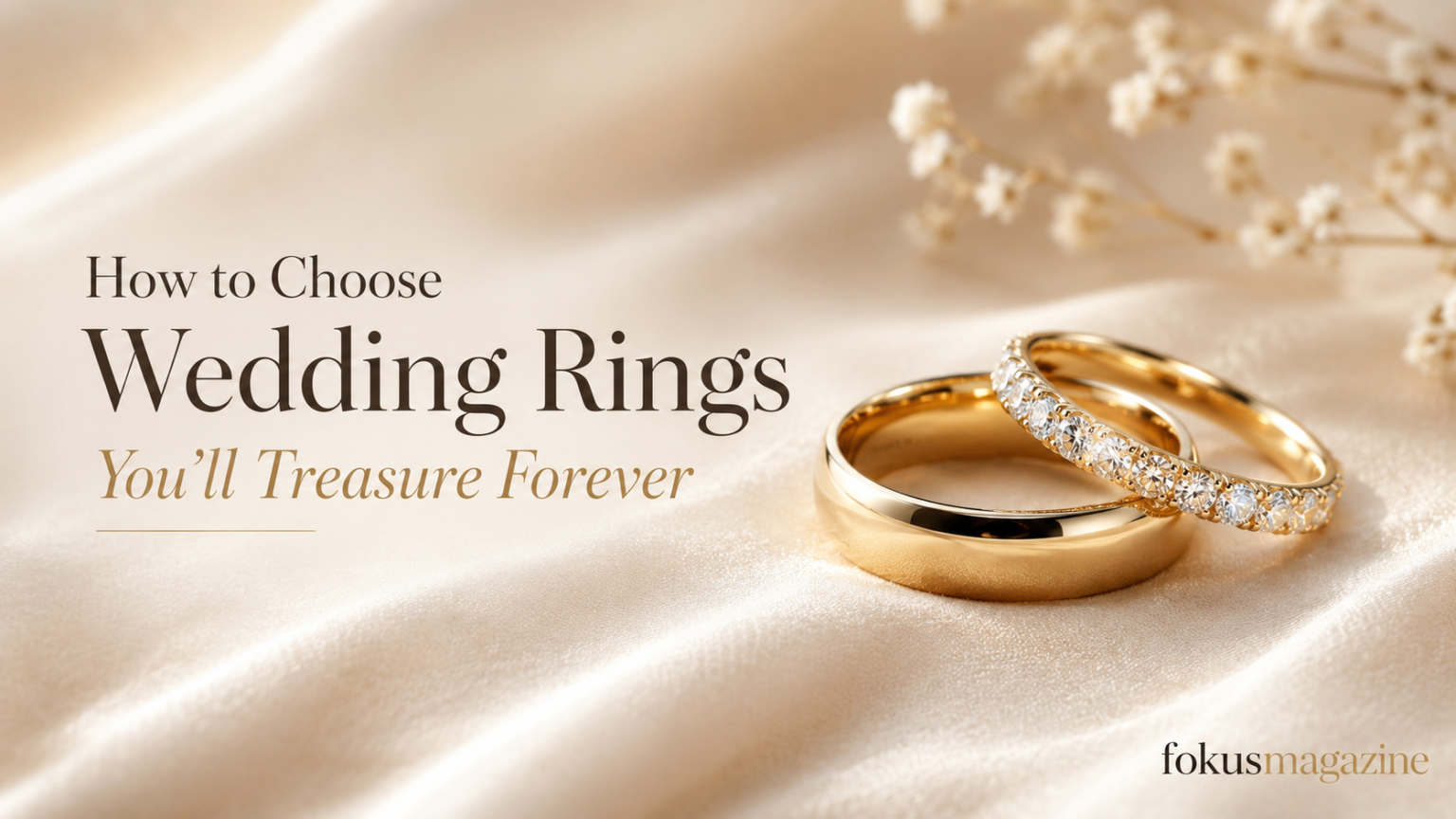

How to Choose Wedding Rings You’ll Treasure Forever
Choosing a wedding ring sounds simple until you step into a jewellery shop and discover just how many options exist. Suddenly, you are comparing metals, widths, finishes, gemstones, profiles, prices, and designs. A small piece of jewellery begins to feel like a very big decision.
- How to Choose Wedding Rings You’ll Treasure Forever
- Start With Your Life, Not the Latest Trend
- Set a Comfortable Wedding Ring Budget
- Understand the Best Metals for Wedding Rings
- Wedding Ring Metal Comparison
- Choose the Right Width
- Pay Attention to the Ring Profile
- Decide Whether Your Wedding Rings Should Match
- Make Sure the Ring Works With an Engagement Ring
- Explore Different Wedding Ring Styles
- Think Carefully About Ring Size
- Look for Quality Marks and Honest Product Details
- Choose a Reputable Jeweller
- Personalise Your Wedding Rings
- Consider Ethical and Sustainable Options
- Know How to Care for Wedding Rings
- Avoid These Common Wedding Ring Mistakes
- A Simple Wedding Ring Buying Checklist
- Frequently Asked Questions About Wedding Rings
- Final Thoughts
That is understandable. Unlike most accessories, Wedding Rings are not chosen for one outfit, one season, or one special event. They are meant to stay with you through ordinary mornings, busy workdays, family celebrations, anniversaries, and all the little moments in between.
The right ring should look beautiful, of course. However, it should also feel comfortable, suit your daily life, and reflect something personal about your relationship. It does not need to be the most expensive ring in the shop. It simply needs to feel right when you wear it.
This guide will help you understand the most important choices, avoid common buying mistakes, and find Wedding Rings that you will be proud to wear for years to come.
Start With Your Life, Not the Latest Trend
Trends can offer inspiration, but your daily routine should guide your final choice.
Think about how you use your hands. Do you work at a desk, in a kitchen, on a building site, in a hospital, or in a workshop? Do you play sports, lift weights, garden, paint, cook, or work with machinery?
A delicate band with raised stones may look stunning in a display case. Yet it may not be the most practical option for someone who wears gloves all day or works with tools. In contrast, a smooth, low-profile band can be easier to wear and maintain.
Before looking at designs, ask yourself:
- Will I wear the ring every day?
- Does my job involve physical work?
- Do I prefer light or heavy jewellery?
- Am I comfortable with regular cleaning?
- Do I want a simple band or a detailed design?
- Will I wear it beside an engagement ring?
- Could my ring size change in the future?
Your answers will narrow the choices quickly. More importantly, they will help you choose Wedding Rings that work in real life, not just in photographs.
Set a Comfortable Wedding Ring Budget
There is no official rule for how much you should spend on wedding bands. The best budget is one that feels comfortable and does not place unnecessary pressure on your wedding finances.
Prices can vary greatly depending on the metal, weight, craftsmanship, brand, gemstones, and level of customisation. A plain gold band may cost far less than a diamond eternity ring, while platinum usually costs more than many alternative metals.
Instead of focusing on a traditional spending rule, decide what matters most to you.
You may care more about:
- A precious metal that can be resized
- A custom engraving
- Natural or lab-grown diamonds
- Handmade craftsmanship
- A designer name
- A matching pair
- A durable ring for daily wear
- A unique shape or finish
It also helps to set two figures: an ideal budget and a maximum budget. This gives you room to compare options without getting carried away.
Remember to include possible extra costs such as engraving, resizing, insurance, delivery, custom design work, and future maintenance.
A meaningful ring does not need to be costly. A simple, well-made band can hold just as much emotional value as an elaborate piece.
Understand the Best Metals for Wedding Rings
The metal affects the colour, price, weight, durability, and maintenance of your ring. Therefore, it is one of the most important decisions you will make.
Yellow Gold
Yellow gold is one of the most traditional choices for Wedding Rings. Its warm colour has a timeless appeal, and it works beautifully with both vintage and modern designs.
Pure gold is too soft for daily wear, so it is mixed with other metals to improve strength. This creates different levels of purity, usually measured in karats.
Common options include:
- 9-karat gold: Durable and generally more affordable
- 14-karat gold: A practical balance of strength and gold content
- 18-karat gold: Richer in colour, more valuable, but slightly softer
Yellow gold can show scratches over time. However, many people enjoy the soft patina that develops because it gives the ring character.
White Gold
White gold offers a bright, modern appearance similar to platinum. It is created by mixing gold with pale metals and is often coated with rhodium for extra shine.
It is a popular choice for diamond bands and contemporary bridal jewellery. Nevertheless, the rhodium coating may wear down with time. The ring may need to be replated occasionally to restore its bright white finish.
People with metal sensitivities should ask about the alloy used in the ring, especially if nickel is present.
Rose Gold
Rose gold has a warm pink tone created by mixing gold with copper. It feels romantic without being overly traditional and works well with both minimalist and decorative designs.
The copper content helps make rose gold fairly durable. Still, it may not be suitable for everyone with a copper sensitivity.
Rose gold looks especially attractive with floral engraving, vintage details, champagne diamonds, and mixed-metal ring stacks.
Platinum
Platinum is a premium metal known for its natural white colour, weight, rarity, and durability. It does not need rhodium plating, and it is often considered a good option for sensitive skin.
Although platinum is strong, it can still develop small marks. Rather than losing metal, it tends to shift slightly when scratched, creating a soft surface finish called a patina.
Platinum Wedding Rings often cost more because the metal is dense and valuable. However, many couples choose it for its long-lasting quality and luxurious feel.
Palladium
Palladium belongs to the same metal family as platinum. It is naturally white, relatively light, and usually requires little maintenance.
It can be a good alternative for someone who likes the look of platinum but prefers a lighter ring. Availability may vary, and not every jeweller offers palladium resizing or repair services.
Titanium
Titanium is lightweight, strong, modern, and often more affordable than precious metals. It is popular for clean, masculine, or industrial-style bands.
However, titanium rings can be difficult or impossible to resize, depending on their construction. Accurate sizing is therefore essential.
Tungsten
Tungsten carbide is known for its weight, hardness, and strong resistance to scratches. It often comes in polished, brushed, matte, black, or grey finishes.
While tungsten is highly scratch-resistant, it can crack under severe impact. It also cannot usually be resized. For that reason, buyers should check whether the seller provides a size-exchange service.
Silver
Sterling silver is attractive and budget-friendly, but it is softer than many other ring metals. It may scratch, bend, or tarnish with frequent wear.
Silver can still work well for couples who prefer an affordable option or who plan to upgrade their bands later. Regular polishing will help maintain its shine.
Wedding Ring Metal Comparison
| Metal | Appearance | Durability | Maintenance | Resizable |
|---|---|---|---|---|
| Yellow gold | Warm and classic | Good | Occasional polishing | Usually |
| White gold | Bright and modern | Good | May need replating | Usually |
| Rose gold | Warm pink tone | Good | Low to moderate | Usually |
| Platinum | Natural white | Excellent | Develops a patina | Usually |
| Palladium | Light, natural white | Very good | Low | Sometimes |
| Titanium | Modern and lightweight | Very good | Low | Often difficult |
| Tungsten | Heavy and scratch-resistant | Very hard | Low | Usually not |
| Silver | Bright and affordable | Moderate | Polishing required | Usually |
Choose the Right Width
Ring width can completely change how a wedding band looks and feels. Even a difference of one or two millimetres can be noticeable.
Narrow bands often look delicate and subtle. Wider bands feel bolder and may have more room for patterns, stones, or engraving.
Common widths include:
- 2 mm to 3 mm: Slim, light, and understated
- 4 mm to 5 mm: Balanced and versatile
- 6 mm to 7 mm: Bold and noticeable
- 8 mm or wider: Strong statement style
Finger length and hand size can influence which width looks most balanced. However, personal comfort matters more than any fashion rule.
Try several widths before buying. A wide band may fit more tightly than a narrow one, so the correct ring size can change depending on the design.
Pay Attention to the Ring Profile
The profile describes the shape of the band when viewed from the side. It affects both appearance and comfort.
Court-Shaped Bands
A court-shaped ring is rounded on both the inside and outside. It is a classic option and often feels comfortable for daily wear.
Flat Bands
Flat bands have a clean, modern surface. They can feel slightly more noticeable between the fingers, especially in wider sizes.
D-Shaped Bands
A D-shaped ring is curved on the outside and flatter on the inside. It offers a traditional appearance without feeling too bulky.
Flat Court Bands
A flat court design has a flatter outer surface and a rounded inner surface. It combines a contemporary look with comfort-fit construction.
When trying on Wedding Rings, close your hand, type on your phone, pick up an object, and move your fingers naturally. A ring can look perfect while your hand is still but feel uncomfortable during movement.
Decide Whether Your Wedding Rings Should Match
Matching bands can create a lovely sense of unity. However, couples do not need to choose identical rings.
One partner may prefer platinum while the other likes yellow gold. One may want diamonds, while the other wants a plain brushed band. These differences do not make the rings less meaningful.
Couples can create a connection in more subtle ways by choosing:
- The same engraving
- Similar finishes
- Matching interior details
- The same metal in different widths
- One shared design element
- The same date or private message
- Coordinating gemstones
The best Wedding Rings reflect both the partnership and the personalities within it.
Make Sure the Ring Works With an Engagement Ring
A wedding band and engagement ring are often worn together. Therefore, they should sit comfortably beside one another.
A straight wedding band works well with many engagement ring designs. However, raised settings, low baskets, halos, and unusual centre stones may leave a gap between the two rings.
A shaped, curved, contoured, or notched band can fit around the engagement ring more closely.
Try Both Rings Together
Do not judge the wedding band on its own. Wear it with the engagement ring and look at the pair from several angles.
Check whether:
- The rings sit comfortably together
- One ring scratches the other
- The band hides part of the engagement ring
- The combined width feels comfortable
- The metal colours work well together
- The rings spin or move too much
- The gemstones rub against metal settings
Some people love a visible gap between the rings because it gives each piece space. Others prefer a close, fitted look. Neither choice is wrong.
Consider a Bridal Set
A bridal set includes an engagement ring and a wedding band designed to be worn together. It can remove much of the guesswork and create a polished, balanced appearance.
However, buying separately gives you more freedom and may make it easier to add an anniversary band later.
Explore Different Wedding Ring Styles
Once you have considered comfort, budget, and metal, you can focus on design.
Classic Plain Bands
A plain polished band is simple, elegant, and unlikely to look dated. It is also easier to clean and usually easier to resize than a highly detailed ring.
A classic band can still feel personal through its width, profile, metal, or engraving.
Diamond Wedding Bands
Diamond bands add sparkle and can complement a diamond engagement ring beautifully.
Popular styles include:
- Half-eternity bands
- Full-eternity bands
- Channel-set diamonds
- Pavé-set diamonds
- Bezel-set stones
- Shared-prong designs
- Scattered diamond bands
Full-eternity bands have stones around the entire ring. They offer continuous sparkle but can be difficult to resize. Half-eternity rings place stones across the visible front section, making future adjustments easier in many cases.
Gemstone Bands
Sapphires, rubies, emeralds, birthstones, and other coloured gemstones can make Wedding Rings feel more individual.
Sapphires and rubies are generally strong choices for regular wear. Emeralds are beautiful but require more care because they are more vulnerable to impact.
Before selecting a gemstone, ask about its hardness, setting, treatment, cleaning needs, and suitability for everyday wear.
Vintage-Inspired Rings
Milgrain edges, engraved patterns, floral details, geometric shapes, and Art Deco influences can give a band an antique feel.
These styles are full of personality, although detailed surfaces may require more careful cleaning.
Hammered and Textured Bands
Hammered, satin, brushed, sandblasted, and matte finishes create visual interest without the use of gemstones.
A textured surface may hide small scratches more effectively than a highly polished finish. Still, some finishes can soften with years of wear and may need professional refinishing.
Mixed-Metal Bands
Mixed-metal designs combine two or more colours, such as white gold with yellow gold or platinum with rose gold.
They are versatile and can help connect jewellery pieces made from different metals. They also suit couples who cannot agree on a single metal colour.
Stackable Bands
A slim wedding ring can be paired with an engagement ring and later joined by an anniversary band, eternity ring, or family ring.
Think ahead if you like the layered look. Leaving room for future additions can help you build a balanced ring stack over time.
Think Carefully About Ring Size
Correct sizing is essential, especially for rings that cannot be resized.
Finger size changes throughout the day. Heat can cause swelling, while cold weather can make fingers feel smaller. Exercise, travel, salt intake, pregnancy, medication, and weight changes can also affect fit.
For the most reliable result:
- Measure your finger more than once
- Avoid measuring when your hands are very cold
- Do not measure immediately after exercise
- Try the exact width you plan to buy
- Check the fit at different times of day
- Ask a professional jeweller to confirm the size
A well-fitted ring should slide over the knuckle with slight resistance. It should feel secure without squeezing the finger.
Wide Wedding Rings often require a slightly larger size than narrow bands. Comfort-fit interiors may also feel different from standard-fit rings.
Look for Quality Marks and Honest Product Details
A reputable jeweller should explain exactly what you are buying.
For precious-metal rings, look for a hallmark or purity stamp. Depending on the country and metal, markings may include numbers or abbreviations that show gold purity, platinum content, or silver quality.
Product details should clearly state:
- Metal type
- Metal purity
- Ring weight where available
- Gemstone type
- Diamond carat weight
- Stone treatment
- Diamond origin
- Ring width
- Ring profile
- Finish
- Sizing limitations
- Warranty terms
- Return policy
For diamond Wedding Rings, ask whether the carat weight refers to the total weight of all stones or one individual diamond.
Lab-grown diamonds and natural diamonds have the same basic physical properties, but their origin and market price differ. The jeweller should describe them accurately so you can make an informed decision.
Choose a Reputable Jeweller
Trust matters when buying a piece you expect to wear for many years.
A good jeweller should answer questions clearly without rushing or pressuring you. They should also be transparent about materials, pricing, maintenance, resizing, warranties, and delivery times.
Look for signs such as:
- Clear product descriptions
- Secure payment options
- Independent customer feedback
- Professional sizing support
- Written return and exchange terms
- Repair and maintenance services
- Stone certificates where relevant
- Realistic production times
- Detailed receipts
- Helpful aftercare advice
Be cautious when a deal seems unusually cheap compared with similar products. A very low price may reflect lower metal weight, plated material, poor-quality stones, weak settings, or limited customer support.
Personalise Your Wedding Rings
Small personal details can turn a beautiful ring into something truly meaningful.
Engraving is one of the most popular options. Couples often add:
- Wedding dates
- Initials
- Short promises
- Song lyrics
- Coordinates
- Nicknames
- A private joke
- A meaningful symbol
- A phrase in another language
- A fingerprint pattern
Keep the available space in mind. Narrow rings may only hold a short inscription, while wider bands can fit longer messages.
Some couples choose hidden gemstones inside the band. Others use a birthstone, a stone linked to the wedding month, or a colour with personal meaning.
Custom Wedding Rings may take several weeks or months to produce. Begin the process early so there is time for design approval, manufacturing, engraving, sizing, and any final adjustments.
Consider Ethical and Sustainable Options
Many buyers now want to understand where their jewellery comes from.
Ethical considerations may include working conditions, mining practices, environmental impact, gemstone traceability, and recycled materials.
Options worth exploring include:
- Recycled gold
- Recycled platinum
- Lab-grown diamonds
- Traceable natural diamonds
- Vintage wedding bands
- Antique rings
- Reset family gemstones
- Local jewellery makers
- Fairtrade-certified gold
- Made-to-order designs
A vintage ring can be a meaningful and sustainable choice. Likewise, using a family ring or inherited gemstone can connect your marriage to an earlier generation.
Ask specific questions rather than relying only on broad terms such as “ethical” or “responsible.” A trustworthy seller should be able to explain what those claims mean.
Know How to Care for Wedding Rings
Even durable rings benefit from regular care.
Remove your ring before handling harsh chemicals, lifting heavy weights, swimming in chlorinated water, or doing work that could trap or damage the band. It is also safer to remove rings before using machinery.
Store the ring in a soft pouch or separate jewellery box compartment. Diamonds can scratch other jewellery, while softer metals can be marked by harder pieces.
For simple gold or platinum bands, gentle cleaning with mild soap, warm water, and a soft brush may be suitable. However, some gemstones need special care.
Pearls, emeralds, opals, and treated stones may react poorly to heat, chemicals, or ultrasonic cleaners. Always follow advice for the specific material.
Have stone-set Wedding Rings checked by a professional from time to time. A jeweller can inspect prongs, channels, settings, and signs of wear before a stone becomes loose.
Avoid These Common Wedding Ring Mistakes
Buying Too Late
Standard bands may be available quickly, but custom designs, unusual sizes, engraving, and handmade rings can take longer than expected.
Start shopping several months before the wedding. This gives you time to compare designs and solve sizing problems without stress.
Choosing Appearance Over Comfort
A ring can look wonderful and still be uncomfortable. Sharp edges, a heavy weight, raised stones, or excessive width may become annoying during daily wear.
Always try the ring properly rather than judging it only from a photograph.
Guessing the Ring Size
Online ring charts can be helpful, but they are not always precise. Paper strips, string, and old ring measurements can produce inaccurate results.
Professional sizing is worth the effort, particularly for tungsten, titanium, eternity bands, and custom rings.
Ignoring Future Resizing
Finger size can change over the years. Plain gold and platinum bands are often easier to resize, while full-eternity, patterned, tension-set, titanium, and tungsten rings may be more difficult.
Ask about resizing before buying, not after.
Following Trends Too Closely
A trendy design may still be right for you. However, do not choose it only because it is popular on social media.
Imagine wearing the ring five, ten, or twenty years from now. A design with personal meaning usually lasts longer than one chosen for temporary attention.
Forgetting About Aftercare
Jewellery needs maintenance. White gold may need replating, polished surfaces may need refinishing, and gemstone settings may need inspection.
Check whether your jeweller offers cleaning, repairs, polishing, resizing, and warranty support.
A Simple Wedding Ring Buying Checklist
Before placing your order, confirm the following:
- The ring suits your daily lifestyle
- The metal is suitable for your skin
- The width feels comfortable
- The profile works for your hand
- The size has been professionally checked
- The band works with your engagement ring
- The design fits your budget
- The stones are suitable for daily wear
- The ring can be resized if necessary
- The engraving is spelled correctly
- The delivery date is confirmed
- The returns policy is clear
- The warranty is provided in writing
- The ring comes with the correct hallmark
- You understand the care requirements
This checklist may seem detailed, but it can prevent expensive and frustrating mistakes.
Frequently Asked Questions About Wedding Rings
How Early Should You Buy Wedding Rings?
It is wise to start shopping three to six months before the wedding. Custom designs, unusual sizes, and detailed engraving may require more time.
Buying early also gives you time to compare styles without making a rushed decision.
Do Both Partners Need Matching Rings?
No. Matching rings are a personal choice, not a requirement. Your bands can be completely different and still represent the same commitment.
You can connect them through an engraving, metal colour, finish, or small hidden detail.
Which Metal Is Best for Everyday Wear?
Platinum, gold, palladium, titanium, and tungsten can all suit daily wear, but each has different benefits.
Platinum is durable and naturally white. Gold is traditional and usually resizable. Titanium is lightweight. Tungsten resists scratches but cannot normally be resized.
The best metal depends on your lifestyle, budget, skin sensitivity, and design preference.
Should a Wedding Band Be Thicker Than an Engagement Ring?
There is no fixed rule. Some people prefer equal widths for a balanced look. Others choose a thin wedding band to keep the engagement ring as the main focus.
Try several combinations to see what looks and feels right on your hand.
Can Wedding Rings Be Resized?
Many gold, platinum, and silver bands can be resized. However, the design affects what is possible.
Full-eternity rings, heavily patterned bands, mixed-material rings, titanium bands, and tungsten rings may be difficult or impossible to resize.
Are Expensive Wedding Rings Always Better?
No. Price can reflect material value, stone quality, craftsmanship, brand reputation, or custom work, but a higher price does not automatically mean a ring is better for you.
Comfort, durability, meaning, and quality should guide your choice.
Is It Safe to Buy Wedding Rings Online?
Buying online can be safe when the retailer is reputable and provides detailed product information, secure payment, clear returns, sizing support, and reliable customer service.
Read the resizing and returns policy carefully, especially for engraved or custom-made products.
Final Thoughts
Choosing Wedding Rings is not about finding the design that impresses the most people. It is about finding rings that feel natural on your hands and meaningful in your life.
Take time to compare metals, widths, profiles, finishes, gemstones, and prices. Try different styles, even ones you did not expect to like. Ask questions about sizing, repairs, hallmarks, warranties, and long-term care. Most importantly, choose with your real lifestyle in mind.
The perfect ring may be a simple yellow-gold band, a sparkling diamond eternity ring, a modern titanium design, or a vintage piece with a story. There is no single correct choice.
Your wedding ring will collect marks, memories, and meaning as the years pass. That is part of its beauty. Choose thoughtfully, care for it well, and let it become a quiet reminder of the promises you made.
Which wedding ring style feels most like you? Share your favourite metal, design, or personal engraving idea, and pass this guide along to someone preparing for their own special day.