
Clarence Franklin Biography: Story and Impact
Some people leave behind more than a name. They leave a voice, a movement, a family story, and a legacy that keeps echoing long after they are gone. Clarence Franklin was one of those people.
- Clarence Franklin Biography: Story and Impact
- Clarence Franklin Bio Table
- Who Was Clarence Franklin?
- Early Life of Clarence Franklin
- The Start of His Ministry
- Clarence Franklin and New Bethel Baptist Church
- The “Million-Dollar Voice”
- Clarence Franklin as Aretha Franklin’s Father
- Clarence Franklin and Gospel Music
- Civil Rights Work and Community Leadership
- Personal Life and Family
- Clarence Franklin’s Influence on Black Church Culture
- Tragedy in Clarence Franklin’s Later Life
- Clarence Franklin’s Legacy
- Why Clarence Franklin Still Matters Today
- Interesting Facts About Clarence Franklin
- Lessons From Clarence Franklin’s Life
- Clarence Franklin in American Cultural Memory
- Conclusion: The Lasting Impact of Clarence Franklin
Known widely as Reverend C. L. Franklin, he was not just the father of soul legend Aretha Franklin. That part of his story is famous, of course, but it is only one piece of a much larger life. Clarence Franklin was a Baptist minister, gospel preacher, civil rights voice, community leader, and one of the most powerful sermon speakers of his generation.
His life began in the rural South, shaped by poverty, faith, hard work, and the deep social struggles of early 20th-century America. Yet, through his voice and conviction, he rose to become a respected figure in Detroit’s religious and cultural life. His sermons filled churches, reached radio listeners, and were recorded for audiences far beyond Sunday morning worship.
This Clarence Franklin biography explores his early years, ministry, family, civil rights work, public influence, tragedy, and the impact he left on gospel music, Black church history, and American culture.
Clarence Franklin Bio Table
| Bio Detail | Information |
|---|---|
| Full Name | Clarence LaVaughn Franklin |
| Also Known As | Reverend C. L. Franklin |
| Date of Birth | January 22, 1915 |
| Age | 69 years old at the time of death |
| Profession | Baptist Minister, Preacher, Civil Rights Activist |
| Nationality | American |
| Net Worth (approx.) | Not publicly verified; historical estimates are unreliable |
| Notable Works / Achievements | Pastor of New Bethel Baptist Church, recorded sermons, civil rights leadership, father of Aretha Franklin |
Who Was Clarence Franklin?
Clarence Franklin was an American Baptist minister best remembered for his booming preaching style, deep spiritual message, and major influence on gospel culture. Born Clarence LaVaughn Walker, he later took the Franklin surname after his mother remarried. He became known across the United States as Reverend C. L. Franklin.
Many people first discover Clarence Franklin because of his famous daughter, Aretha Franklin. However, before Aretha became the “Queen of Soul,” her father was already a respected name in church circles. He was known for his expressive sermons, emotional delivery, and ability to hold an audience with nothing but words, rhythm, and faith.
In Detroit, Clarence Franklin became pastor of New Bethel Baptist Church, where his influence grew far beyond the pulpit. He helped shape a religious space that welcomed gospel artists, civil rights leaders, musicians, and families looking for hope during difficult times.
Early Life of Clarence Franklin
Clarence Franklin was born on January 22, 1915, in Mississippi, during a time when life for Black families in the rural South was often filled with hardship. His early world was shaped by farming communities, church traditions, racial segregation, and limited opportunities.
Still, the church gave many young people like Clarence Franklin a place to speak, lead, learn, and dream. From an early age, he felt drawn toward preaching. That calling was not unusual in his family background, as religious leadership and spiritual discipline were part of his roots.
He grew up around the language of scripture, gospel music, prayer meetings, and Sunday worship. These influences shaped his voice and personality. Later, that same voice would make him famous as one of the most memorable Black preachers of his era.
The Start of His Ministry
Clarence Franklin began preaching as a teenager. That detail alone says a lot about his confidence and spiritual passion. Most people are still finding their way at that age, but he was already stepping into pulpits and speaking to congregations.
His preaching style was not flat or formal. It was alive. It carried rhythm, emotion, storytelling, and authority. He could move from quiet reflection to thunderous passion in a way that made people listen closely.
In the Black church tradition, preaching is not only about delivering information. It is also about feeling, timing, music, memory, and connection. Clarence Franklin understood that naturally. His sermons sounded almost musical, and that is one reason people later called him the man with the “Million-Dollar Voice.”
Clarence Franklin and New Bethel Baptist Church
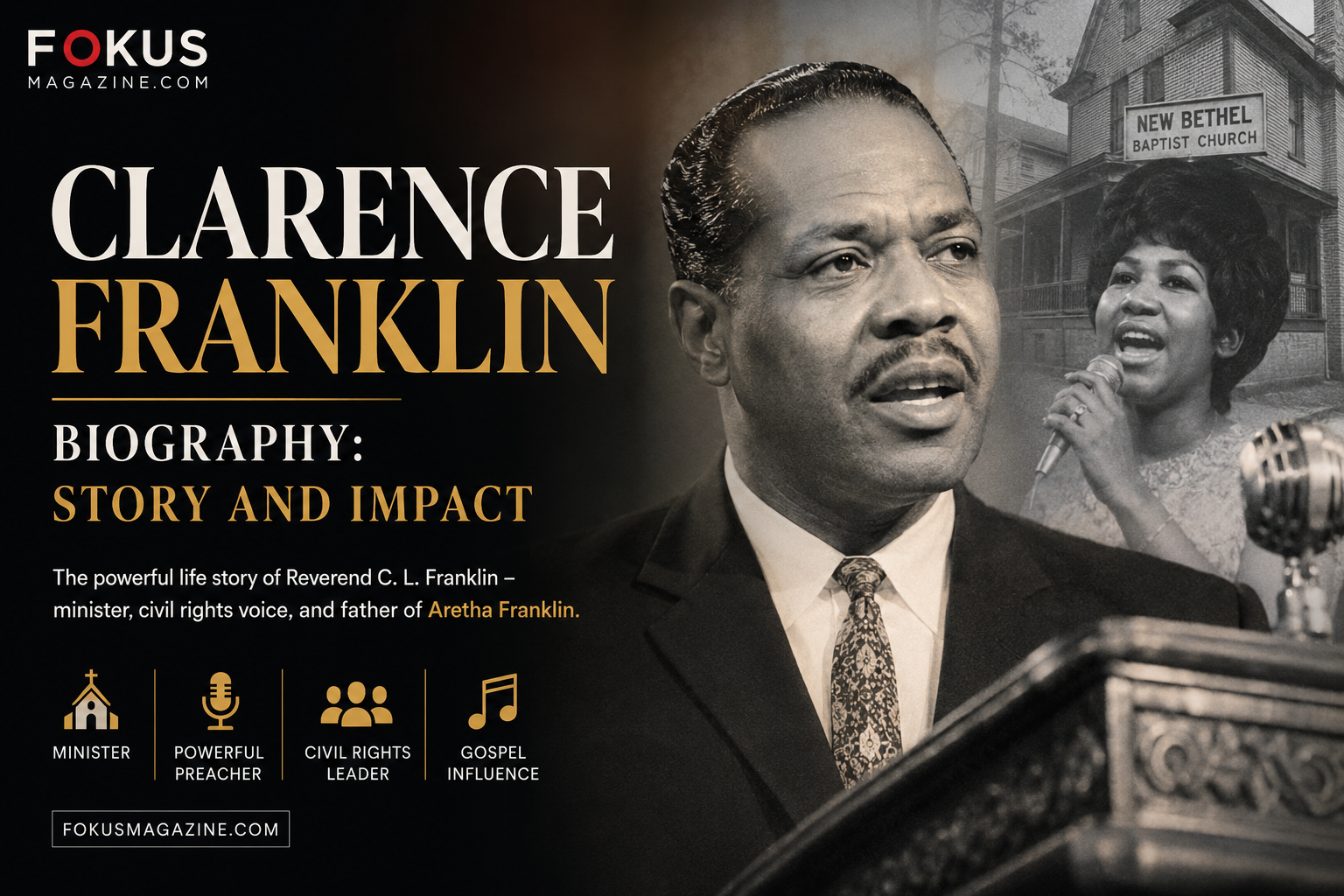
One of the most important chapters in the life of Clarence Franklin was his leadership at New Bethel Baptist Church in Detroit. He became pastor there in the 1940s and turned the church into a major center of worship, music, and social influence.
Detroit was changing fast during that time. Families from the South were moving north during and after the Great Migration. They came looking for work, safety, dignity, and better futures. Churches like New Bethel became more than religious buildings. They became community homes.
Under Clarence Franklin, New Bethel Baptist Church became known for powerful services, gospel music, and strong preaching. It attracted ordinary churchgoers, famous singers, activists, and public figures. The church was a place where faith and culture met.
Why New Bethel Mattered
New Bethel Baptist Church mattered because it gave people:
- A spiritual home in a growing city
- A place to hear gospel music and strong sermons
- A community during social change
- A platform for civil rights conversations
- A religious environment that shaped Aretha Franklin’s early music
For Clarence Franklin, the church was not just a workplace. It was his stage, his mission field, and his community base.
The “Million-Dollar Voice”
One cannot talk about Clarence Franklin without talking about his voice. His preaching voice was famous. It was deep, smooth, emotional, and commanding. People did not only hear his sermons; they felt them.
His recordings helped spread his reputation beyond Detroit. At a time before social media, streaming platforms, and viral videos, recorded sermons were a powerful way for ministers to reach larger audiences. Clarence Franklin issued many sermon recordings, and his delivery became admired in gospel and church communities. Britannica notes his importance in the Black gospel tradition and his many recorded sermons and choir albums.
His voice carried the sound of the Black church: call and response, musical phrasing, emotional rise and fall, and spiritual urgency. For listeners, his sermons were not just religious messages. They were performances of faith, hope, struggle, and survival.
Clarence Franklin as Aretha Franklin’s Father
Of course, many readers know Clarence Franklin because he was the father of Aretha Franklin, one of the greatest singers in American music history. Aretha grew up surrounded by church music, gospel singers, and her father’s preaching.
That environment mattered deeply. Before Aretha Franklin became a soul icon, she sang gospel music in church. Her father’s home and church brought her close to some of the most important voices in gospel and popular music. Britannica notes that C. L. Franklin was a nationally influential minister and that his church and home were visited by major musical figures.
Clarence Franklin’s influence on Aretha was not only musical. He also gave her access to audiences, church culture, and public performance at an early age. She learned how to move people emotionally, something her father did every time he preached.
Family Influence on Aretha Franklin
Aretha’s early life was shaped by:
- Gospel music
- Church services
- Sermon rhythms
- Black spiritual traditions
- Detroit’s cultural energy
- Famous gospel visitors
- Her father’s public presence
This background helped create the emotional power that later defined her music. When Aretha sang, listeners heard more than notes. They heard church, pain, strength, and soul. Clarence Franklin played a major role in that foundation.
Clarence Franklin and Gospel Music
Although Clarence Franklin was not mainly known as a singer, his impact on gospel music was real. His sermons had musical qualities, and his church was closely connected to gospel performance.
The Black church has always played a major role in American music. Gospel shaped soul, R&B, blues, and even rock. Clarence Franklin stood in the middle of that tradition. His church was a space where preaching and music worked together.
He helped preserve and promote gospel culture at a time when recordings were becoming more popular. Sermon albums and choir recordings allowed church sounds to enter homes across the country. In this way, Clarence Franklin helped bring Black religious expression to wider audiences.
Civil Rights Work and Community Leadership
Clarence Franklin was not only a preacher. He was also connected to the civil rights movement. Like many Black ministers of his era, he understood that faith and justice could not be separated.
The church was often a key organizing space during the civil rights struggle. Ministers gave speeches, hosted meetings, encouraged voters, supported marches, and spoke against discrimination. Clarence Franklin used his platform to support justice and dignity for Black Americans.
In Detroit, he was part of a larger community of religious and civic leaders who pushed for equality. His role as a minister gave him moral authority. People trusted him not just because he could preach, but because he spoke to real issues affecting families, workers, and communities.
His Civil Rights Impact
Clarence Franklin’s impact included:
- Supporting racial justice
- Encouraging civic engagement
- Using the pulpit as a moral platform
- Connecting faith with social responsibility
- Inspiring listeners during a difficult period in American history
This part of the Clarence Franklin biography is important because it shows that his work was not limited to Sunday worship. He was part of a larger fight for respect, rights, and human dignity.
Personal Life and Family
Clarence Franklin’s family life was complex, public, and deeply connected to music history. He was married to Barbara Siggers Franklin, Aretha Franklin’s mother. The family experienced both joy and pain, including separation and loss.
Aretha’s mother died when Aretha was young, which left a deep emotional mark on the family. Clarence Franklin continued raising his children in Detroit, and his household became known for music, faith, and high-profile visitors.
His children included talented singers and performers. Aretha became the most famous, but the Franklin family as a whole had strong musical roots. Gospel, soul, church music, and performance were woven into everyday life.
Clarence Franklin’s Influence on Black Church Culture
To understand Clarence Franklin, one must understand the power of the Black church. For generations, the Black church has been a place of worship, education, leadership, comfort, protest, and cultural expression.
Clarence Franklin represented the preacher as both spiritual guide and public figure. His sermons spoke to the soul, but they also reflected the social world around him. He had the kind of presence that made people feel seen.
His preaching style influenced how people understood religious oratory. He showed that a sermon could be poetic, musical, emotional, and intellectually sharp at the same time.
What Made His Preaching Special?
His preaching stood out because of:
- Strong vocal control
- Emotional storytelling
- Biblical knowledge
- Rhythm and musical timing
- Clear moral messages
- Charismatic delivery
- Deep connection with listeners
That combination made Clarence Franklin one of the memorable preaching voices of the 20th century.
Tragedy in Clarence Franklin’s Later Life
The final years of Clarence Franklin’s life were tragic. In 1979, he was shot during what has often been described as a robbery attempt at his Detroit home. He survived the shooting but remained in a coma for years afterward. He died on July 27, 1984, at the age of 69.
It was a heartbreaking end for a man whose voice had once filled churches with strength and hope. For his family, congregation, and admirers, the tragedy was deeply painful.
Still, the violence of his final years should not define his entire story. Clarence Franklin’s life was much larger than that ending. His legacy lives in sermons, memories, church history, gospel music, civil rights work, and the influence he had on his daughter’s career.
Clarence Franklin’s Legacy
The legacy of Clarence Franklin is layered. Some remember him as Aretha Franklin’s father. Others remember him as the pastor of New Bethel Baptist Church. Many know him as one of the great recorded preachers of his time.
His influence can be seen in several areas:
| Area | Clarence Franklin’s Impact |
|---|---|
| Religion | Helped shape modern Black preaching traditions |
| Gospel Music | Supported gospel culture through church and recordings |
| Civil Rights | Used religious leadership to support justice |
| Detroit History | Became a major faith leader in the city |
| Family Legacy | Helped shape Aretha Franklin’s early musical world |
| Public Speaking | Became known for a powerful sermon voice |
Why Clarence Franklin Still Matters Today
Clarence Franklin still matters because his story connects so many important parts of American history. His life touches the rural South, the Great Migration, Detroit’s rise, gospel music, the civil rights era, Black church leadership, and the birth of soul music.
In addition, his story reminds us that cultural icons do not appear from nowhere. Aretha Franklin’s greatness had roots. Those roots included church pews, gospel songs, Sunday sermons, family pain, community strength, and her father’s unforgettable voice.
Clarence Franklin also matters because he represents a generation of Black ministers who served as more than pastors. They were counselors, activists, public speakers, organizers, and cultural leaders. They helped their communities survive difficult times and imagine better futures.
Interesting Facts About Clarence Franklin
Here are a few important facts that make this Clarence Franklin biography even more meaningful:
- Clarence Franklin was born in Mississippi in 1915.
- His birth name was Clarence LaVaughn Walker.
- He became widely known as Reverend C. L. Franklin.
- He was the father of Aretha Franklin.
- He served as pastor of New Bethel Baptist Church in Detroit.
- His sermons were recorded and widely heard.
- He was known for his powerful preaching voice.
- He was connected to gospel music and civil rights leadership.
- He died in 1984 after spending years in a coma following a shooting.
- His influence remains part of American religious and music history.
Lessons From Clarence Franklin’s Life
The life of Clarence Franklin offers several lessons. First, it shows the power of voice. A voice can comfort, challenge, inspire, and lead. His voice did all of that.
Second, his story shows how faith communities can shape culture. New Bethel Baptist Church was not only a place of worship. It was a place where music, activism, family, and public life came together.
Third, Clarence Franklin’s life shows that legacy is never simple. He was a respected preacher and a major cultural figure, but his family story also included pain and complexity. That makes his biography more human, not less important.
Finally, his story reminds us that the people behind famous names often deserve deeper attention. Aretha Franklin became one of the greatest voices in music, but the world that shaped her included Clarence Franklin’s pulpit, home, church, and influence.
Clarence Franklin in American Cultural Memory
Today, Clarence Franklin is remembered as a bridge between church and culture. His life connected sacred music with popular music, local ministry with national influence, and family history with public legacy.
He belonged to an era when sermons could become recordings, churches could become cultural centers, and ministers could become public voices for justice. His story is not just about one man. It is about a community, a movement, and a sound.
For readers interested in gospel history, Black preaching, Aretha Franklin’s background, Detroit church life, or civil rights leadership, Clarence Franklin remains an important figure to study.
Conclusion: The Lasting Impact of Clarence Franklin
Clarence Franklin lived a life filled with faith, influence, struggle, music, leadership, and tragedy. He rose from the rural South to become one of Detroit’s most respected religious voices. He preached with rare power, led New Bethel Baptist Church, supported civil rights, helped shape gospel culture, and played a major role in the early life of Aretha Franklin.
His name deserves to be remembered not only because of his famous daughter, but because of his own work, voice, and impact. Clarence Franklin was a preacher, a father, a community leader, and a cultural figure whose story still speaks today.
If this article helped you understand the life and legacy of Clarence Franklin, share it with others who enjoy history, gospel music, civil rights stories, and powerful biographies. And if you have thoughts about his impact, his sermons, or his connection to Aretha Franklin’s journey, join the conversation and keep his story alive.